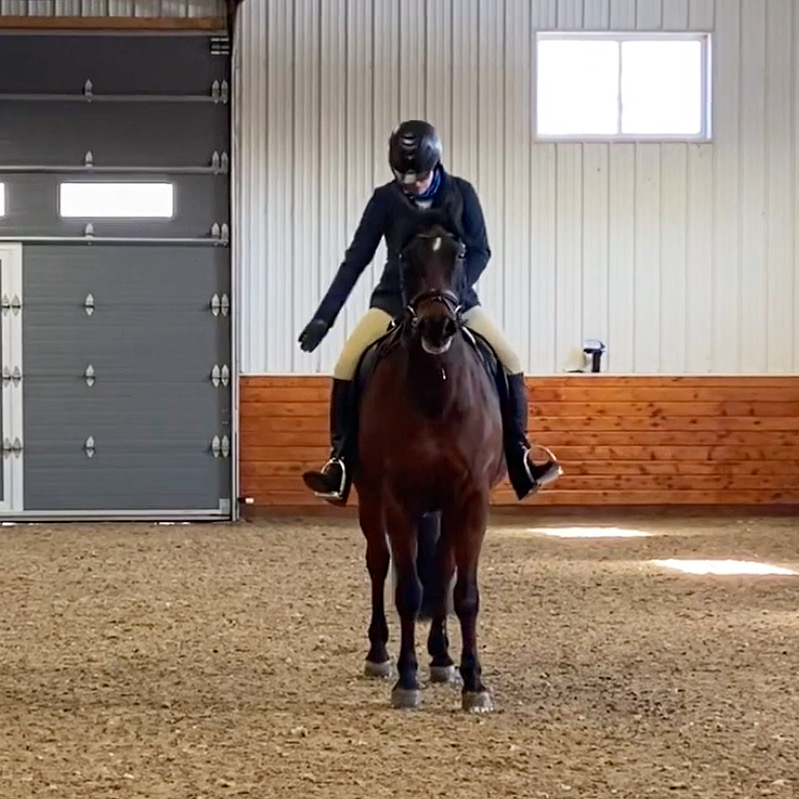
Being The Little Fish, or 2024 Dressage at Devon, Part 1

Two years back, I wrote about a green ribbon cracking the glass ceiling, when my three year old pony-sized Morgan mare Spirit’s Celeste took sixth place in a massive Open In-Hand class at Dressage At Devon. The thing about cracks is they start to sag, and widen, and at some point, a clever little fish fry could wiggle itself through, into the big pond.

The thing about being the little fish in the big pond is that you can stay hidden, slyly slipping from shadows and under leaves, watching the bigger fish, a little bit in fear because they are large and can be scary, but also in wonder and learning. Watching and staying mostly unseen, you can learn the patterns, the routines and rituals the bigger fish use throughout their lives in order to become creatures of their size. Little fish can grow, and instead of the minnow scales we believe we carry, we could instead develop bright colors, or fancy fins. Taking the time to be an observant little fish means that when we’ve grown up a bit and started to get a little bolder, we might be more ready to swim freely in the big pond.

Yes, I do love metaphors.

My first showing with Dressage at Devon was in 2018, with my little stallion Primal Thunder. I had not shown since I was a young teenager and only then in schooling or fair shows, and he was fresh off a summer of breeding and only light work. We were greener than grass and the smallest fish in that big, intimidating pond. Our high score of 68.4% meant nothing to me, not like it should, only that if I’d taken a test in school I’d have received a D+.

The reason I always return to this particular show is that I was this green unknown entity, asking the show staff oodles of questions and making mistakes and everything – but they were all kind to me. I felt encouraged, supported, and my stud pony’s good disposition and cute appearance attracted compliments enough that I felt maybe, just maybe, my idea of breeding Morgans for sport, wasn’t all that crazy.

2024 was my sixth showing at Dressage at Devon. Sadly we all skipped 2020 for the plague year, but I have gone every year since 2018. I might be a weird long finned betta fish in a pool of massive carps, but I think we are learning “the moves.”

I brought the best of my matrilineal breeding this show, descended from Triplesweet Trinity, a mare I bought from a lesson program who has heartily surpassed my highest expectations for her as a broodmare. This lineup included Spirit’s Celeste, her daughter by my stallion Primal Thunder, Starberry Solstice, her son by CM Sunday Kode from Canada, and Starberry Shamrock, the first son of Spirit’s Celeste by Clear Creek Zeus, who was rescued from a meat truck (I’ll blog about his story later). A weird sounding grouping on the sire sides, but in my head, it worked. A nice mix of blood highlighted by Courage of Equinox, Merriehill Chicagoan, Beamington, UVM Promise, Trophy, Bennfield’s Ace, and Chasley Superman genotypically, that to me, phenotypically turned out nice sport pony and sport horse type for the breed.

Dressage at Devon’s Breed Division is primarily showing horses in hand, young stock and breeding adults, but it also includes a set of under saddle classes called Materiale. All of these are to assess conformation, motion, trainability, etc, to understand if a horse is suitable for a future in dressage and similar sports. Of course, I paraphrase, but if you are interested in a complete description of the aims of the classes and how they are judged, I urge you to check out http://www.dressageatdevon.org and http://www.usdf.org. Some of you might know that I do not generally begin riding my horses until they are four or older, as their spines are still forming until about age six, and I would rather have a horse who has a long productive life that began a year or so late than a horse who retires before twenty but started at three. What this means for my sport horse program, though, is that I am behind for the Materiale. Materiale classes are for ages three, four, and five. Originally my intent had been to show Miss Celeste at four in Materiale, but the vet advised to wait a year on bitting under saddle due to how her teeth were shedding and developing, so she carried her first foal and had some ground work but mostly got to take her four year old year to grow herself and her baby. Her colt was born on St Patrick’s Day and he’s perfect. To me anyhow.

Materiale is a new division for me. As a child I rode hunter flat classes so the concept of a walk trot canter class is not foreign to me, but I had still not ever ridden, as an adult, in a horse show of any kind much less an A-rated show in the oldest fairgrounds in the country. Greener than grass, people. For real. But, we did our best. I started Celeste under saddle in the end of May. It’s true what they say about riding starts from the ground, and if you can do it on the ground, you can probably get it done in the tack too – my girl was ready for the saddle work to start, and learned her cues quickly. Her fitness was a bit less than was desired, as she’d just delivered her first baby, but with our chiropractor’s adjustments and our vet’s diet recommendations, the endurance and muscle building workouts got her physically about where she needed to be.

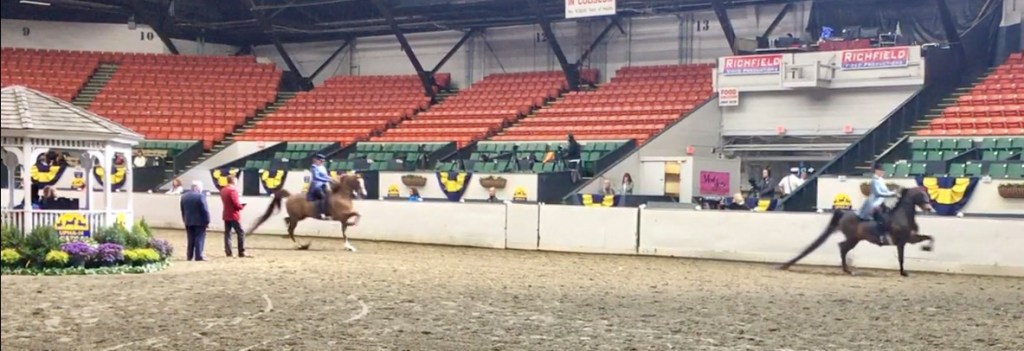
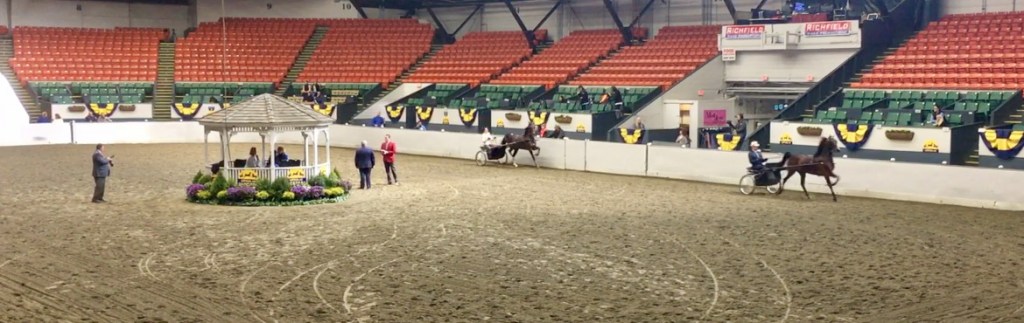
We arrived at Devon Fairgrounds on Monday, middle of the day. Evening, they’d set aside time just for the Materiale horses and riders to spend time in the two rings, getting used to the lights and the flowers and the like. It was almost dark when we saddled up and headed out, two green little fishes in the big blue rings. Celeste, just under fifty rides into her riding career, did not put a foot wrong. She looked, sure, she counter bent to examine things or when something sounded weird, she put her head up in surprise at things, she even did a slight kick up of her heels when she needed to do a full body shake so I’d get off and let her shake without me in the saddle. That’s it. We did a brief walk-trot-canter both ways in Wheeler, and a nice big walk both ways in the Dixon Oval. Seventeen and eighteen hand warmbloods passed us and Celeste just focused on me, her surroundings, and her job. She hadn’t been off property since we were last at Devon, in 2022, and she’s never been ridden in… a proper arena. Our riding space at home is clay soil, sometimes with grass in it, that’s sometimes too hard to ride at more than a walk, or a slanted uneven grass hillside. This beautiful level footing was soft and predictable and I could feel Celeste enjoying it on her feet.

I’m not sure I slept that night. Our ride wasn’t until midday. As I am not an early morning person, this suited me fine, and let me take the morning to warm up my three horses with nice walks around the fair grounds and get myself dressed and ready without feeling rushed. Our first in-hand class was scheduled to immediately follow the Materiale ride, so I wanted to be sure my colts were stretched and clean and set, and that my amazing groom would be ready to help me quickly tidy up Celeste between her ride and her run. Quick shout out to Noelle for being the best right-hand-woman, jennie-on-the-spot, self motivated and sunny show groom!

I was a bit freaked. It’s not every day that you take your first ride in a show ring since you were a tiny pre-teenage human, and for it to be at an A-rated show like Dressage at Devon… I tried not to think about the level of anxiety I should be experiencing so it wouldn’t hit me. Celeste looked stunning, mane in perfect plaits, coat buffed to a healthy shine, tack clean and gleaming. I mounted up.

Not one but four of the riders I was in the class with complimented me on my adorable pony in the warmup ring, with bright, friendly smiles. I should add, the rest of the class averaged 17hh, and Celeste had been measured the day before for her temporary pony card (permanent card at eight and she is five so is measured every season) at 138 cm, or 13.2hh. A pair of trainers I have known since I began showing at Dressage at Devon was at the rail, and as I passed, they shared encouraging words and reminded me to breathe and sit back. I am so grateful for them. They got my head back in the game right before we began the class.

Celeste, in her fiftieth time under saddle, took to the arena boldly, forward but listening, and she did everything I asked. Including, to my embarrassment, picking up the incorrect lead going right, but I am certain it is because I was not balanced from my own nerves. My beloved pony took care of me, and we got the lead fixed. As the littlest horse, I made sure to put us on the inside when passing other horses, and circled in front of the judges to prove her flexibility. We made it. I did not fall off. She did not freak out. She was a star. We scored 69.4% and took home a ribbon.
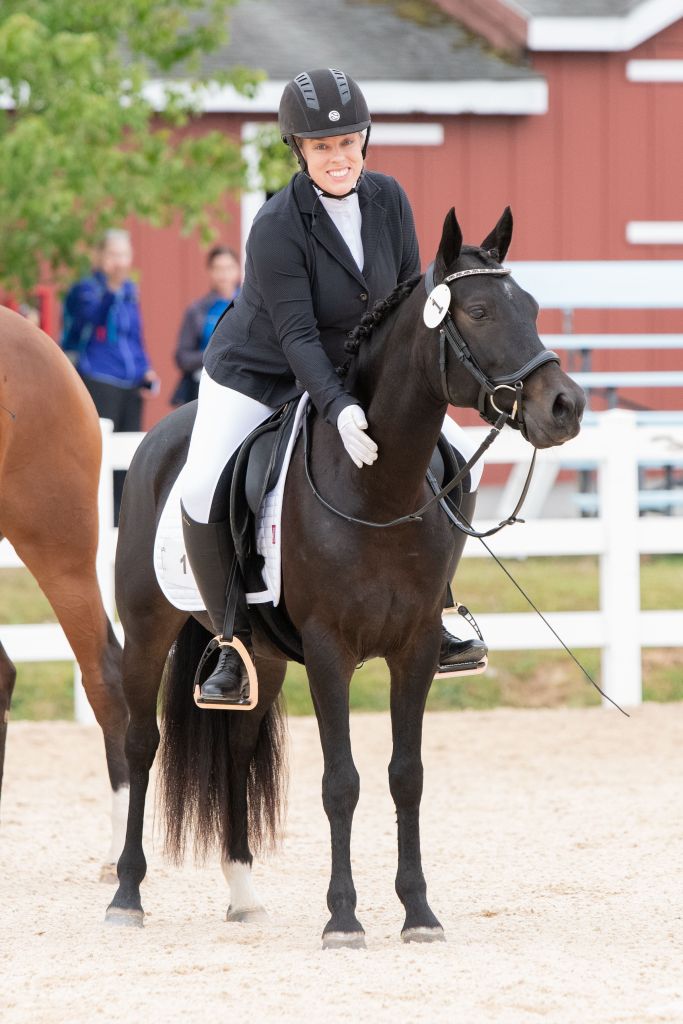
Photo by Jess Casino Photography
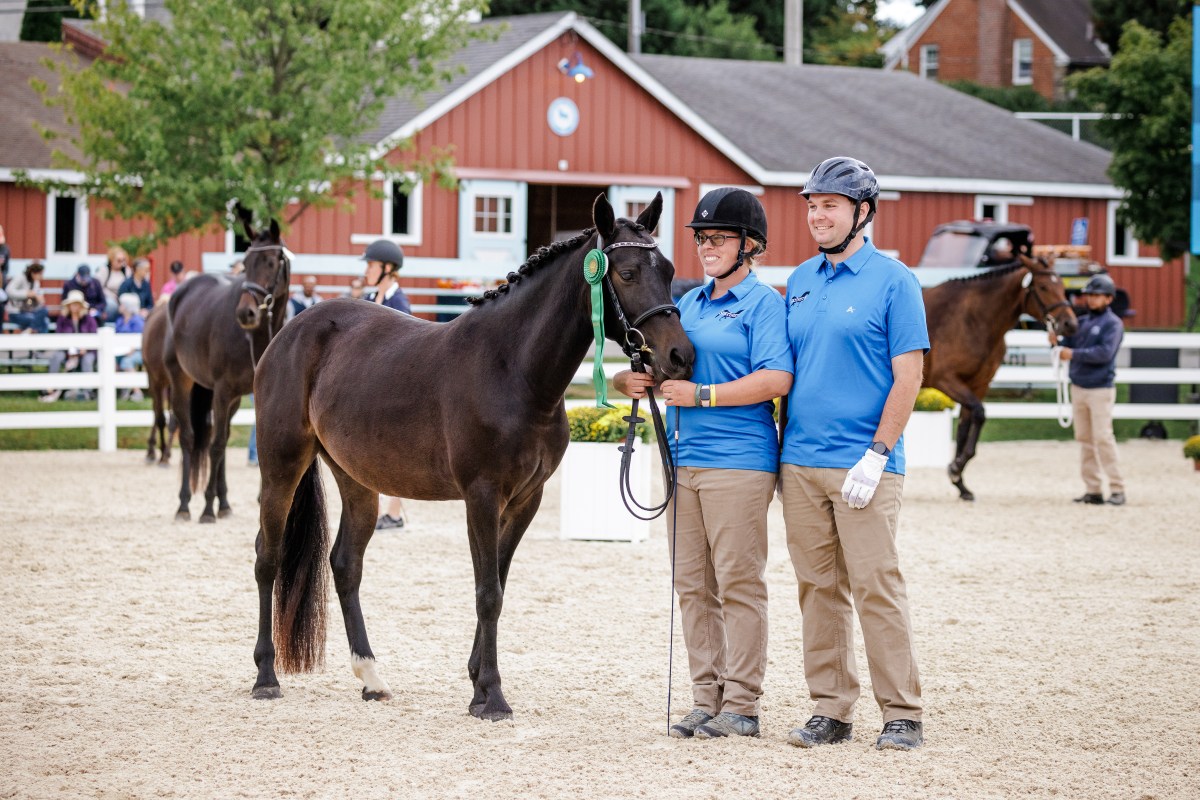
Gallery

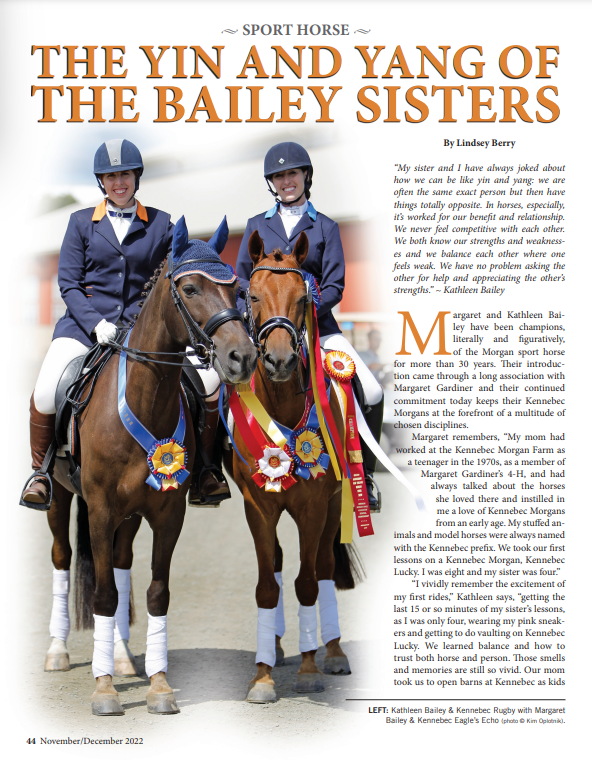
Upcoming for The Morgan Horse Magazine!

My next article is coming up for The Morgan Horse Magazine!

Get the in-depth scoop on Margaret and Kathleen Bailey, their passion for Kennebec Morgans, and how they prove the true versatility inherent in our breed!

To check out the full scoop and the rest of the Morgan news, subscribe here! https://www.morganhorse.com/magazine/subscribe/

How a green ribbon cracked the glass ceiling

“Excuse me, is this the three year old fillies class? I’m so sorry it’s just your horse is so small”

The sophisticated woman and her elegant seventeen hand dappled bay filly were a beautiful pair. I definitely understood immediately what she meant, and explained yes, it was that class, my horse was just small. I swear Celeste understood what I was saying as she seemed to puff a little up and stand straighter, to seem more imposing than her mere 137cm. The tall filly, I would later hear through show ground gossip, was the daughter of an Olympic hopeful.

“Did you win?” Is always the question people ask when you return from a horse show. For some events that makes sense, but for a Morgan horse in a dressage ring pitted against an Olympic daughter or the best Hanoverian colt in the country, that question does not come with the correct implications.

Many of my readers are Morgan horse people, or sport horse people, or both. Given that I do have many readers as well who are not thusly inclined, please allow my elaboration.

Morgan horses are known as all around horses, as saddleseat or as carriage horses, but seldom do people associate them with many of their greatest accomplishments, such as opening the West or being our loyal companions in war. Much in the same way, Morgans as a mount suitable for sports like dressage, jumping, and three days eventing, are often overlooked, despite their exceptional intelligence and good sense, their durability and athleticism, and their unfailing love for people. This means that entering Morgan horses into competitions seen as “unusual for the breed” mean the horse and human must work much harder to garner the same respect as for a horse seen as more appropriately bred.

Especially when the competition is the biggest breed show in America, at the oldest horse show grounds in the country, with international competitors at Olympic levels.

As I am still recovering my physical strength after a badly broken leg, I had to stop handling before the afternoon class in which Celeste was entered. My green, truly amateur husband stepped in. He handled our other filly beautifully, and though Celeste is more challenging, I believed she would perform adequately for him. I didn’t want to scratch.

This horse is my pride and joy, and I watched on pins and needles as my soulmate set her up for conformation inspection, and then led her in her triangles. Our dear friend was tailing, and my girl had a lovely spring in her step, mostly respecting my husband and showing herself off nicely. They looked beautiful, and it was a very good run, I couldn’t have asked for better especially being sidelined as I was – so when her score was announced and she had exceeded the leading score by six full points, I literally started crying.

The class had ten pairs run the triangle. As we watched the next scores tick in, some higher, some lower, one particular one quite high – but those higher scores besides the one, were quite close to Celeste, in fact within 1.075 points. Her position slipped from first of course but she paused at sixth with two horses to go. Then one. Then the class was over.

For those not in the know, at Dressage at Devon, the horses in places first through sixth get to stay in the ring, be individually called out to receive your ribbon, and get a special winner’s circle official ribbon. Places seven through ten receive their ribbons with their score sheets at the office.

Five towering warmblood fillies, and one tiny Morgan pony, stood in the winner’s group, patiently waiting for the ribbons to be retrieved, and then for the final scores to be read as they took their turns posing with their beautiful fluttering prizes.

My tiny Morgan found equal footing with some of the world’s best warmbloods.

Did we win, with my filly’s green sixth place ribbon?

Why yes, I do believe we did.

Photo by Purple Horse Designs

Morgan Horse Disciplines

A lot of buzzwords are thrown around on social media about Morgan Horses – performance, English, park, sport, western, endurance, show horse, performance prospect, saddleseat, driving, etc. Some of these are pretty well understood by some, others not very well by anyone, and quite a lot of energy is put into proving a horse is or is not a type that has not been clearly defined by the claimant in the first place.

So, what are all these disciplines, really? What can a Morgan do? While we Morgan people might say “everything”, I am writing this blog for people who might not be as versed in Morgans as a breed as others are. I’m also going to attempt to refrain from waxing on about each individual discipline in each category, but forgive me, I may about the categories in which I am well versed 🙂 If you are looking for more information on a particular discipline, I highly encourage you to do a Google search and read up!

I’m also going to take a pause to point out, you can have a multi-disciplinary horse. Your Park horse may have a Sport future; your Endurance gelding might also love Cutting! Perhaps your Combined Driving horse also enjoys Working Equitation – with a Morgan horse, multiple careers, even at the same time, are reasonably common.

Taken by Lindsey Berry at the UPHA horseshow in the Big E at Springfield MA in 2017.

Morgans are commonly seen in the public eye as performing in Main Ring, or Rail Class, or Show Horse Disciplines – or even, for many who ride them, English Classes. Bear with me, I know it’s a broad label, but working on grouping into categories we can break down further. For the uninitiated, Show Horse Disciplines involve high stepping horses and beautiful formal suits on their riders. Note that in England, Show Horse is quite a different category so this label only works when describing classes on this side of the pond (for now). Show Horse Disciplines, more formally, are designed to show off the high action and extravagant gaits of certain breeds, including but not limited to Morgans, Saddlebreds, and Arabians.

Show Horse Disciplines are historically derived from two sources; plantation riding in America, where a smooth and high stepping mount was preferred, as it was comfortable enough for hours of plantation riding but fancy enough to look smart while riding around town; and literal park riding in England, where riders would show off their fanciest and highest stepping mounts in the city parks.

Show Horse Disciplines under saddle include: Park Saddle, English Pleasure, Classic (or Country) Pleasure, Saddleseat Equitation, Hunter Pleasure, and Hunter Hack. I will also include Side Saddle under this label because although it is less common, it is done sometimes with Morgan horses at all breed shows, and fits the historical category of “fancy park riding.”

Show Horse Disciplines under harness include: Carriage Driving, Pleasure Driving, Classic Pleasure Driving, Park Harness, Road Hack, and Roadster.

Taken by Lindsey Berry at the UPHA horseshow in the Big E at Springfield MA in 2017.

Bianca Gaeta and AE’s Cielo Blanca showing at Buxmont Riding Club, Telford PA, 2021

Western Disciplines, are mostly competitions showing off a horse’s ability to work on a ranch, and is what we call Working Western. The more popular Western discipline for Morgans, however, is Western Pleasure, and the associated Parade type classes which use very fancy, often silver bedecked Western tack and Western Pleasure style of motion. Western Pleasure evaluates the horses for their manners under saddle, a calm and responsive disposition, and their suitability for a relaxed, slow gait cadence when moving. A young horse showing ability for the frame desired in Western Disciplines, a lower neck set and a naturally smooth gait, for example, is said to be a Performance Prospect.

There is a growing number of Morgan fans who are interested in the Working Western side of Western disciplines, and are competing against stock breeds (quarter horses, appaloosas, paint horses, etc) to show the suitability of our breed for working cattle, managing a ranch, and braving the unknown.

Western Disciplines include: Cutting, Roping, Team Penning, Ranch Sorting, Ranch Riding, Reining, Western Pleasure and Parade Classes.

Bianca Gaeta and AE’s Cielo Blanca sorting cows at Black Diamond Stables in Flemington, NJ, 2021.
Karrie Rossen and WVS Flame Burner at Stockade NY, 2021.

Sport Disciplines are a complicated group, not because they’re not clear and defined, as they are, but because the label is misleading and confusing. Riding horses IS a sport, so by that concept ALL disciplines are sport disciplines, but Sport as a group of disciplines has been clearly defined by discipline-defining-people (not me).

The trouble with the label “Sport” and “Morgans” is that Sport has been used as a “cover all” label for Morgans who work in non-main-ring and less-understood-western disciplines. This is confusing and misleading, as it implies that many more disciplines are Sport than are actually considered Sport by the rest of the horse world outside of Morgans (and sometimes it turns people away from our breed, because it appears that the breed does not understand what Sport entails). A sport horse is a type, not a breed or a single discpline, but the term is applied to horses bred and used for the traditionally Olympic equestrian sporting events of dressage, eventing, show jumping, and combined driving. In America, we also consider hunt seat and show hunters (hunter jumpers), and western dressage, to be sport horse athletes. Horses used for saddle seat, western riding disciplines except for dressage, racing, or endurance riding, are not generally described as sport horses.

Dressage complicates Sport because there are generally three types of commonly known dressage – traditional dressage like what is done in the Olympics, which has levels and musical freestyle and cool stuff like that, western dressage which is a lot like traditional dressage only done in western tack with a different set of movements (but it is not hard to cross over a horse from one to the other, as they are quite similar), and classical dressage, also known as haute ecole, or high school, which is what the Lippizzan horses of Vienna do with the rearing and kicking supremely elegant war horse moves. Classical Haute Ecole dressage is not considered a Sport Discipline.

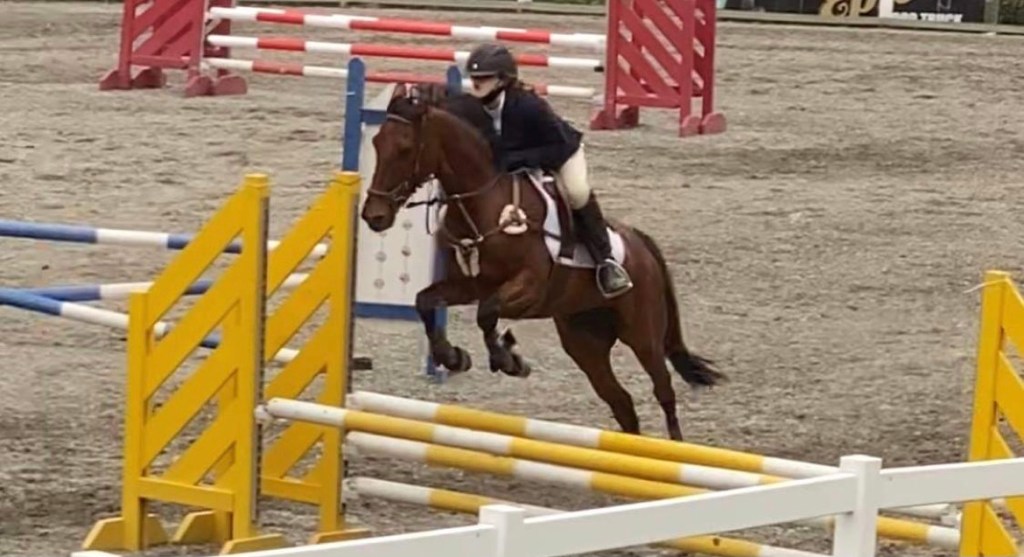
Sport Disciplines: Dressage, Western Dressage Eventing, Show Jumping, Hunter Jumping, and Combined Driving.

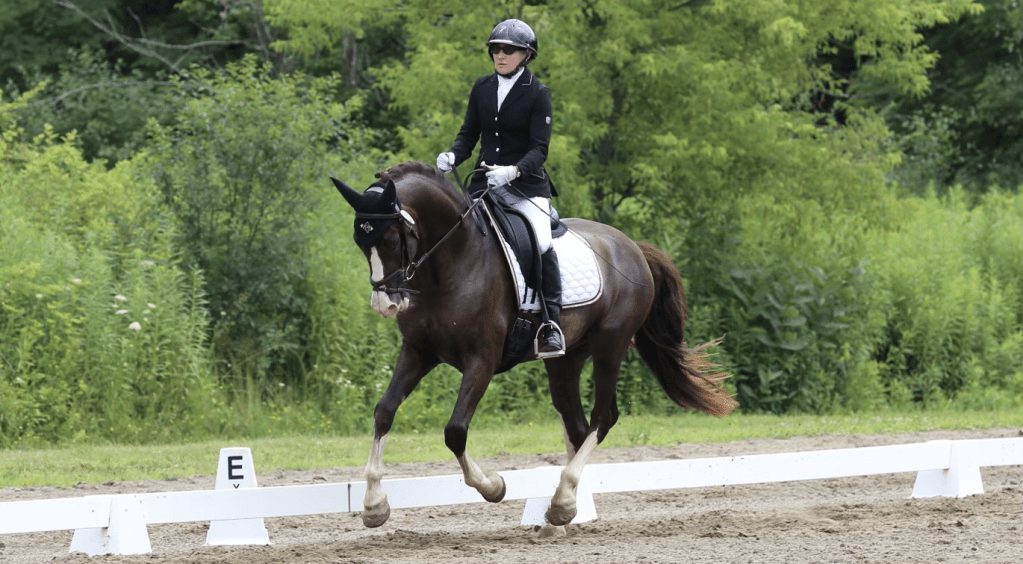
Olivia Bullock and EF Moment of Fate at GMHA 2021 in Woodstock VT.

*

Long Distance Riding Disciplines include Endurance, Hunter Paces, Competitive Trail Riding, and Limited Distance Riding. Simply, Long Distance Disciplines are horse riding on controlled, long-distance races. They can be any distance and can take multiple days to accomplish. Some include various sorts of obstacles, and scheduled veterinary exams to ensure the health and safety of the horse.

*

There is a category of emerging discplines which I am going to call Western Classical Crossover, including Cowboy Dressage and Working Equitation.

Cowboy Dressage is not the same as Western Dressage, which confused the heck out of me, so I would assume confuses other people as well. It is instead the blending of the best of Western riding and classical dressage, more tailored to the western conformation and tack specifically, where western dressage is more the adaptation of traditional dressage for western equipment.

Working Equitation is also a misunderstood discipline. YouTube videos show magnificent Lusitanos in Spain galloping over what looks like a western trail class course, moving and handling things in a way that many of us did in childhood gymkhanas, while also performing hairpin turns and magnificent feats of strength, flexibility, and intelligence. Working Equitation was actually created to showcase the skills developed worldwide to work cattle and ranch chores, and it has four phases: working dressage, ease of handling with obstacles, speed with obstacles, and cattle handling.

Trainers and Masters

Every equestrian should take lessons.

Everyone should take the time to find a trainer they trust and with whom they have appropriate chemistry.

Growing up, not unlike many, many equestrians, I rode “school horses” – off the track thoroughbreds, former trail riding quarter horse crosses, mixed breed ponies and retired showers alike. We all should ride these horses, the grumpy old guys who don’t want to keep working; the obnoxious mares who shine in the show ring and buck like the devil when you’re home; the devious pony who can always get you rubbed off and you can’t ever quite tell how. Riding these guys teaches us how to ride horses, not just how to ride a single horse. Horses, like people, come in every shape and size conceivable, with every personality type we could imagine. Part of why the college and high school riding team shows are so successful at producing quality riders is because the students get to the show, get assigned their horse, and whoever they get, they have to ride them to the best of their ability. The best piece of advice my childhood trainer gave me is, ride as many different horses as you can. Now, in my thirties, I’ve ridden well over a hundred, and lost track of the variations by breed, ages, genders, riding styles, training types, and the like.

Every riding school has horses to ride. Many have a variety of horses that will teach you to ride any horse you encounter. Not every program has a proper school master.

The school master takes the rider, who can ride lots of horses, and teaches them how to ride like the professionals do.

The best analogy I have is learning to play music. In many schools, kids have to pick a musical instrument to play, and can use a school-owned instrument, or a rental instrument, and learn the basics. Once you know the basics, though, and you can play well, you cannot hear or feel what it is to produce professional music, because the instrument is incapable of producing that quality sound. Your fingers cannot learn how to create certain nuances if the instrument cannot produce them. It is not the fault of the musician nor the instrument, but it must be recognized that at some point, if you want to continue to play music, you must leave behind the student instrument and pick up the professional level, so you can begin the process of producing music at a higher level.

It is the same, or similar in horses. A good lesson program will move you up from the beginner pony, who’s bomb proof and more whoa than go, eventually to the fresh OTTB who’s hot and spicy and can’t always get the correct lead at the canter, for example. You school and you show and move up in levels. If you are very lucky, or picky, you can move up to a school master, who can show you how to produce the nuances of professional riding.

I am very lucky that my dressage trainer has two of these masters.

Both of these horses are World Champion Morgan horses.

Both of these horses had full careers in Morgan rail disciplines, and both as later teenagers quickly mastered a new discipline so thoroughly that both have USDF medals.

Riding these horses is like playing a Stradivarius. I feel I can say that, as I play the cello and once was invited by incredible chance to play a little on a visiting professional’s Strad. It is nothing like training a young horse, which is what I spend most of my time doing, or even like riding a nicely trained show horse. It is incomparable, though once settled in the saddle for the first time with each of these horses, I definitely felt as though a very good and foolish friend was allowing me to take their very expensive sports car for a joy ride.

A school master is the Stradivarius in its discipline. It is the best tool upon which to learn your chosen style to ride.

I am a new dressage student, relatively speaking, as I have only been riding dressage for a year. I have ridden for so many years, with so many people, in so many disciplines and on so many horses, that I consider myself an excellent rider. I love young horses, and as a breeder I like to start my young horses before they go out into the world so they have the best start (I can’t always, as I wait until earliest three but more often four to get on their backs, as I do not want to hinder their growth or cause them pain). I’m usually I’m a position of schooling the horse, training the horse, teaching them what to do or reminding them of what they always know. To ride the two masters in my trainer’s barn, I am finally learning what it feels like to be schooled myself. These two geldings are kind boys, not tough or ornery – but they will not do “the thing” unless I am asking for “the thing” correctly. One is slightly more forgiving, and will take a slightly miffed direction and give you the benefit of the doubt, but the other will not move towards the asked for action unless you are on the money with your cues. It forces you to be present, mentally, every single stride. It forces you to RIDE, every single stride. It makes every muscle in your body ache with the effort. When you get it, though, their reward is so happy, the action done so nicely and beautifully that it impresses on your mind and body how to ask correctly.

Every lesson should move you forward in your discipline. Every clinic, every show, and even every ride, we should be growing and learning and expanding. If you find you are not moving forward, and you want to be, it might be time to reach out, find a clinician who’ll really push you, find a new place to school, or even find a new horse to work with and learn new things. Trainers and masters are out there, who will help you reach new heights, push you to be where you want with your riding, and find you the opportunities that will best help you grow.

My hope for you is that you find your place with your horses, with people who support you, and that you all enjoy the ride.