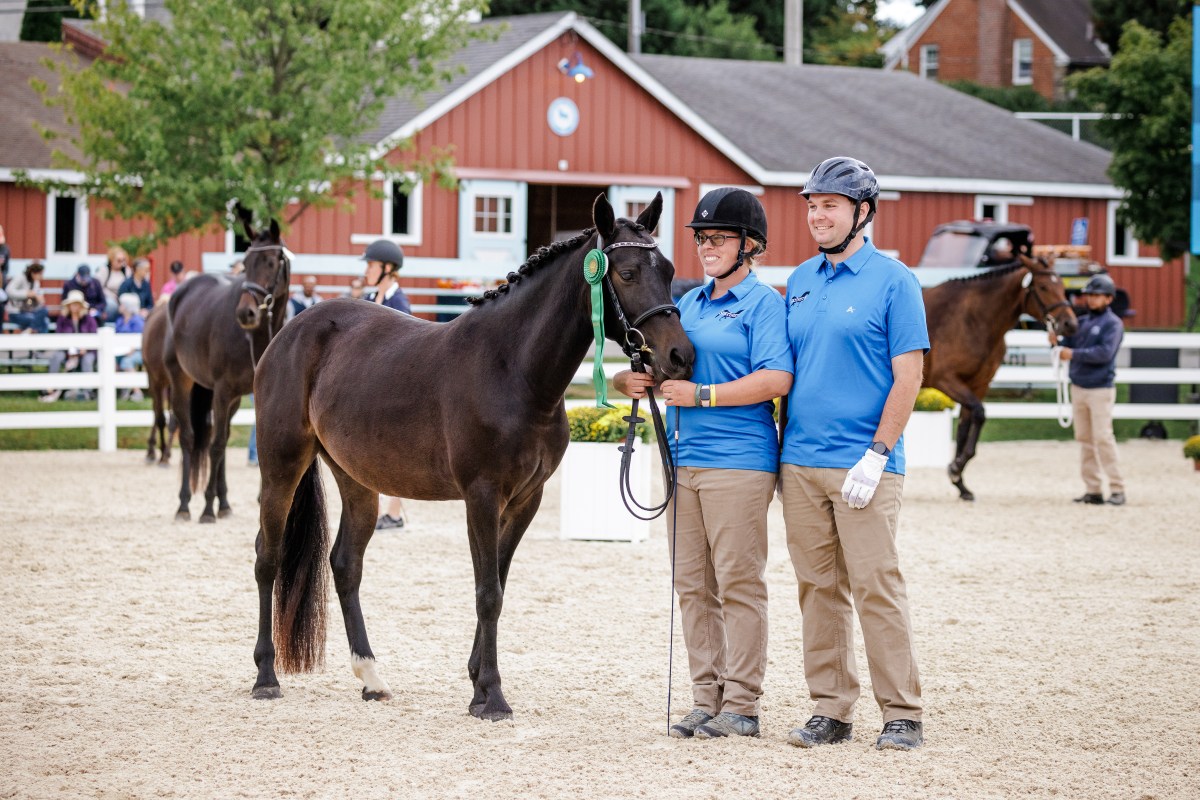
“Excuse me, is this the three year old fillies class? I’m so sorry it’s just your horse is so small”
The sophisticated woman and her elegant seventeen hand dappled bay filly were a beautiful pair. I definitely understood immediately what she meant, and explained yes, it was that class, my horse was just small. I swear Celeste understood what I was saying as she seemed to puff a little up and stand straighter, to seem more imposing than her mere 137cm. The tall filly, I would later hear through show ground gossip, was the daughter of an Olympic hopeful.
“Did you win?” Is always the question people ask when you return from a horse show. For some events that makes sense, but for a Morgan horse in a dressage ring pitted against an Olympic daughter or the best Hanoverian colt in the country, that question does not come with the correct implications.
Many of my readers are Morgan horse people, or sport horse people, or both. Given that I do have many readers as well who are not thusly inclined, please allow my elaboration.
Morgan horses are known as all around horses, as saddleseat or as carriage horses, but seldom do people associate them with many of their greatest accomplishments, such as opening the West or being our loyal companions in war. Much in the same way, Morgans as a mount suitable for sports like dressage, jumping, and three days eventing, are often overlooked, despite their exceptional intelligence and good sense, their durability and athleticism, and their unfailing love for people. This means that entering Morgan horses into competitions seen as “unusual for the breed” mean the horse and human must work much harder to garner the same respect as for a horse seen as more appropriately bred.
Especially when the competition is the biggest breed show in America, at the oldest horse show grounds in the country, with international competitors at Olympic levels.
As I am still recovering my physical strength after a badly broken leg, I had to stop handling before the afternoon class in which Celeste was entered. My green, truly amateur husband stepped in. He handled our other filly beautifully, and though Celeste is more challenging, I believed she would perform adequately for him. I didn’t want to scratch.
This horse is my pride and joy, and I watched on pins and needles as my soulmate set her up for conformation inspection, and then led her in her triangles. Our dear friend was tailing, and my girl had a lovely spring in her step, mostly respecting my husband and showing herself off nicely. They looked beautiful, and it was a very good run, I couldn’t have asked for better especially being sidelined as I was – so when her score was announced and she had exceeded the leading score by six full points, I literally started crying.
The class had ten pairs run the triangle. As we watched the next scores tick in, some higher, some lower, one particular one quite high – but those higher scores besides the one, were quite close to Celeste, in fact within 1.075 points. Her position slipped from first of course but she paused at sixth with two horses to go. Then one. Then the class was over.
For those not in the know, at Dressage at Devon, the horses in places first through sixth get to stay in the ring, be individually called out to receive your ribbon, and get a special winner’s circle official ribbon. Places seven through ten receive their ribbons with their score sheets at the office.
Five towering warmblood fillies, and one tiny Morgan pony, stood in the winner’s group, patiently waiting for the ribbons to be retrieved, and then for the final scores to be read as they took their turns posing with their beautiful fluttering prizes.
My tiny Morgan found equal footing with some of the world’s best warmbloods.
Did we win, with my filly’s green sixth place ribbon?
Why yes, I do believe we did.
Photo by Purple Horse Designs
 The Modern Morgan
You’re awesome Lindsey! And Celeste too!!!!
LikeLiked by 1 person